Conversations at the intersection of culture, community, and global Black expression
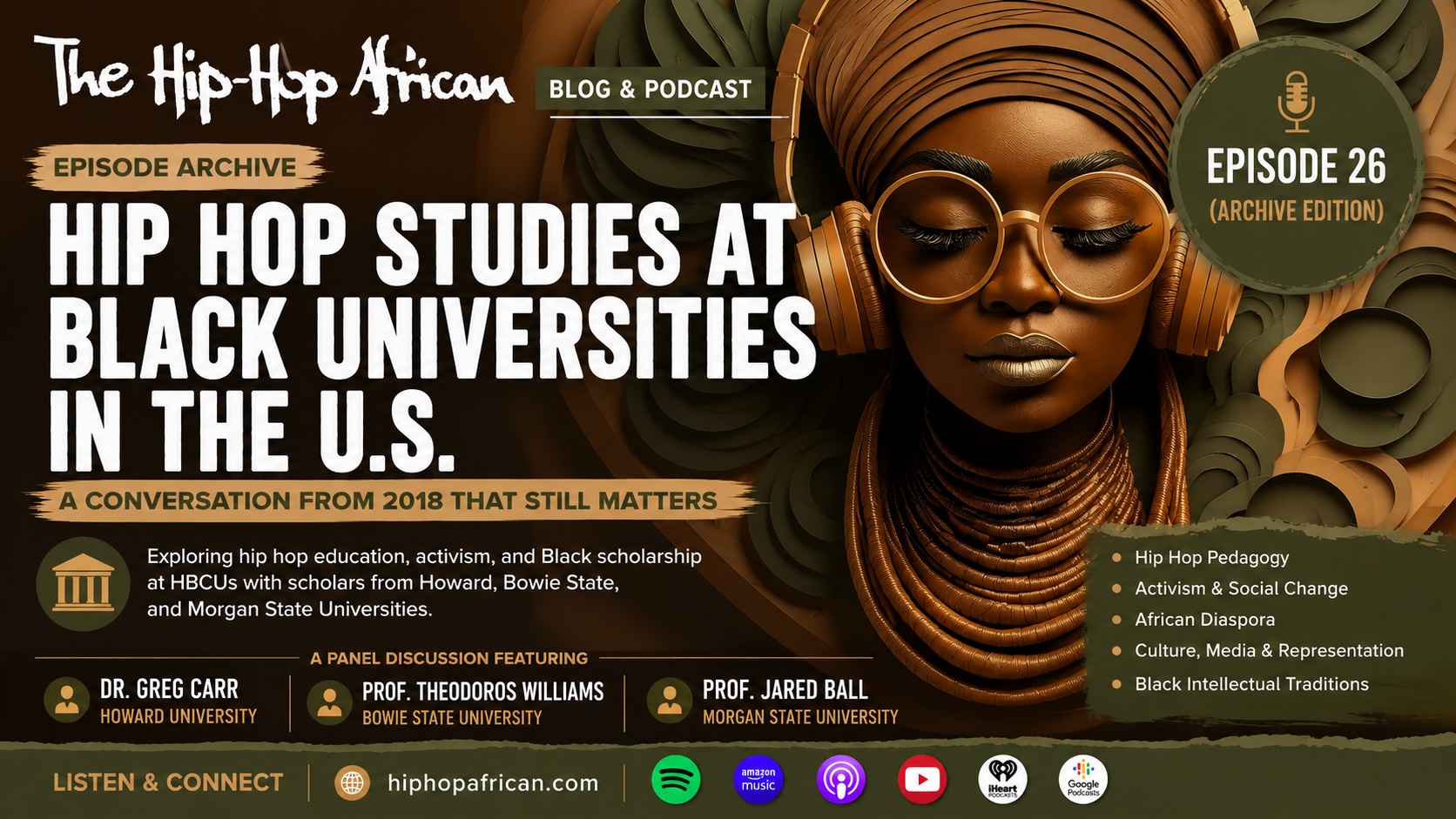
The Hip Hop African Podcast is a space where African hip-hop, diasporic creativity, and cultural critique meet. Hosted by Dr. Msia Kibona Clark, scholar of African Cultural Studies and Global Hip-Hop, the show dives deep into the music, movements, and makers shaping hip-hop scenes across the continent and throughout the diaspora.
For more than a decade, the podcast has featured intimate conversations with artists, activists, scholars, DJs, producers, and cultural workers whose stories reveal the power of hip-hop as both an art form and a political force. From Johannesburg to Accra, Nairobi to the DMV, we explore how local histories, identities, and struggles shape global hip-hop culture—and how young people use music and media to tell new stories about Black life.
Whether you’re a longtime listener, a student of hip-hop, or newly discovering the global currents of the culture, this podcast offers grounded, accessible conversations that center African narratives and highlight the transnational flow of ideas, aesthetics, and liberation politics.

The longest running podcast on African hip hop.

The podcast has released over 100 episodes, which are available on this site, as well as iTunes, Spotify, GooglePlay, Stitcher, and on most platforms you go to for podcasts. You can subscribe to the podcast and receive new episodes as they are released. We have recently released several video episodes on our Hip-Hop African YouTube channel.


Ep. 111: Lyricx: Breaking in Ghana, Building Across Africa – The Hip Hop African

Host, Msia Kibona Clark
Dr. Msia Kibona Clark is an Associate Professor of African Studies at Howard University and one of the leading scholars of African and global hip-hop culture. Her work centers on how artists across the continent and throughout the diaspora use music, digital media, and performance to shape identity, articulate resistance, and build transnational communities.
A pioneering voice in the field, Dr. Clark has spent over a decade documenting and analyzing hip-hop movements in South Africa, the United Kingdom, Tanzania, Ghana, and the United States. She is the author of Hip-Hop in Africa: Prophets of the City & Dustyfoot Philosophers. Her scholarship and teaching explore cultural flows, gender and representation, democratized media, and youth activism—anchoring hip-hop as a powerful site of Black cultural production.
Beyond the classroom, Dr. Clark is the founding director and a faculty coordinator of Howard University’s Hip-Hop Studies minor and co-organizer of the annual HU Hip-Hop Studies Conference. Her work brings together artists, students, and scholars to both document and expand the global landscape of hip-hop.
As host of The Hip Hop African Podcast, Dr. Clark brings a unique blend of academic insight, field experience, and deep respect for the culture. Her interviews create space for artists to tell their own stories, while offering listeners thoughtful context on the histories, politics, and creative practices shaping hip-hop around the world.